Week One

Week One Feb 5 – 12

We awake at the crack of noon. Our tasks are clear: Vehicle. Phone. Internet. The rest of life will take care of itself.


We drive to the other side of Hermanus and the car dealers for our fact finding mission. Started with Nissan, then Toyota, then Hyundai. Mostly new vehicles, and the prices are high. A new 4x4 Hyundai Tucson is 240,000 rand = $34,000. Should we go with 4 wheel drive? Should we go SUV or pickup…bakkie? A bakkie (buck-ee) is the SA nickname for a pickup truck. Decisions. “Around here the roads are fine," the salesman tells us, "but if you’re going into Africa, you’ll want 4x4.” Huh? I thought we WERE in Africa! But the car salesman, and others since refer to everything north of here as "Africa, the REAL Africa."

Next day we drove toward Cape Town, with the Strand Nissan our destination, and maybe a few other dealerships. Continued on the beach road past the surfers and beach towns of Betty’s Bay, Rooiels, Pringle Bay, and finally to Strand. Peter, a kind of Peter Sellers type, is there to meet us in the modern showroom. We test drive the XTrail, 5 speed, 70000 km, 189,000 rand =$25,000.. Not bad, roomy, seats fold flat for sleeping, roof rack, spotlights. He has another coming from Joburg, automatic, demo, 40000km, same price. We’ll be back.

Decided against going into CT any further as it’s getting later and we are pretty much set on the Xtrail. Near Stanford on the return trip, we think about grabbing a bite. As we proceed down main street, Queen Victoria St,. there is quite a gathering of cars and people just behind the Info bureau. Pulling up to a football sized open field, the village green, we see the masses, milling about, sitting on the grass, on lawn chairs, smoke billows from the braai (barbecue, the national pastime) area, music. Wow! What the hell is this?

We shyly tried to mix and discover that the food is free, the wine is flowing (lots of drunk guys), and the occasion is a book signing by a local author. She has sponsored the whole gig. Great! Yes, we bought the book, had her sign it, mingled, went for seconds on the boerwors (SA sausage), had a few beers and made some friends. Notably, Micheal, the chef at the Birkenhead Brewery and Vineyards. Into his cups, he buys me a beer right off, can’t be all bad. We talk US politics and get the update on Obama-Clinton, McCain, since we are without tv or internet. At the end, he invites us out for comp Sunday lunch at the brewery.

Later, Mimi wakes me in the middle of the night shrieking, wailing incomprehensibly like a ghost, a banshee with the screamin' mimi's, spooky as hell. “A, B, C, D…” It goes on for 10 minutes and I elbow her awake. Dazed, she recounts her nightmare in which people in a house must be killed the same way as their previous owners, and knives, and all kinds of awful gory details. A guy dressed in all black. A portent…?

Sunday morning pops up and we go for a nice run, our first since arriving, out to the plaat (beach) and back, about 6 km. Hurriedly showered and dressed and drove to the Birkenhead. Yes, Michael was there, and yes, he remembered the night before as he enters the restaurant from the garden clothed in …all black!!!

I started with the sampler beer set. Loved them all, really. Excellent beers, but went with the pilsner, though the lager is similar to a Heineken. Then he gave us the personalized tour of the works. Cool. Tasted some right out of the big stainless steel tub, mmmmm. Then it was time for lunch. Mimi goes for calamari and I went with chicken/shrimp salad. OMG. A bottle of icy cab sauv. The world is looking very good. Another bottle, please. Then a cake dripping in cream and a coffee and a grappa. Finally, a smooth SA brandy. OMG.

After much frivolity and heavy talk about politics, life, and kids, we are off.


The universe and we are one. Mimi wants to drive, using the "You drank my brandy” rationale. OK. We want to go the beach, and the closest one is through Stanford and out to the plaat. Over the gravel road, past the guard gate, “Yes", he says, "it is OK for this car.” And further toward the sound of the surf we go. Coasting over the loose sand like Arabs on a flying carpet. Drunk Arabs. The last dune between us and the waves is straight ahead….

Whoomp. That’s the sound a car makes when its front wheel is buried up to its chassis in sand. We were.

No problem, we’ll just dig it out and off we go. Heck, we’re desert people, right? Mexico-trained. An hour later, grains of sand in every crevice of our bodies, and the only progress was a meter forward, 100 cm back.

What to do? Call all of our friends. Michael. Mimi clambers up the dune to get a signal (we had gotten Vodacom phone service) and connects, tentatively with him in town. Sure, be right out. As the sky darkens, and the rain snaps on the hood and roof of the rental Toyota, we wait. The buzz is gone. The universe’s bond with us broken.

Eventually the rain lets up and we go back up the dune. And there he comes, the sand man. Sand in the glasses, sand clinging to his half wet black shirt, and looking none too happy.

He’s stuck, too. Just a km back.

Mike phones a friend, a plumber. Good, thinks I, a plumber is much better in this situation than a teacher , ex-teacher, and a chef. He arrives, after another 45 min. ties a far too weak nylon rope to Michael’s submerged (sub-sanded) bakkie, it snaps. After a bit we give up and he takes us, weary, deflated, defeated, back to de Kelders.

After a night of no-sleep, we get up at 6 to be ready for Gerhard to take us to the Birkenhead to meet Michael and attempt Car Rescue Part II. Through not-enough-coffeed eyes, we amble up the hill and he is just pulling out in his white Mercedes 230. He whizzes along the N43 as the skies morph from the deep gray swirls we had over our house to bright blue and cotton white cumulus over Stanford. “It’s a tiny incident in a long life,”opines Gerhard. The road crests a hill and the view down to the rectilinear town is outstanding, mountains flanking it to the inland and green fynbos leading to the sea in the other direction.

Michael is there, having changed from all black to a t-shirt that reads, “I’m not as stressed as I appear.” Yeah right. Koos, and Wilfrid, one older and one younger farming types and two blue dungareed field workers join Mimi and me in the back of the well-worn maroon bakkie, a shovel and a few 1x4’s are the only equipment in sight. Not to worry, as I am relieved that at least we have some “real men” to help out, not a teacher and a chef.

The road goes straight through Stanford and turns to gravel as it nears the river. It passes some large holdings, farms, guest houses, and after some 20 km passes a wooden guard shack. From there, the road loses its quality and slowly turns rougher and rougher and sandier and looser and well, no sober person would ever drive a little Toyota Yaris out there.

Eventually, longer than we’d remembered, we reach Michael’s bakkie, its ass sticking up in the air like a high schooler shooting a moon at us. Some quick digging, roll up the sleeves and a six-person heave ho and, miraculously the truck finds purchase and removes its body backwards from the hole it had dug itself.

Now our car. We walk up the road to it, finding it shooting the same moon. Again, lots of digging, and lots more heave ho, and with some up and back, up and back, we extricate ourselves. Halleluiah.

Gingerly, we 2nd gear it all the way back through yesterday's puddles and rock strewn sand.

Maybe we aren’t quite ready for African adventure yet.

Walker Bay


Walker Bay

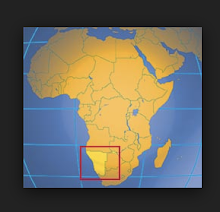
Walker Bay is a bite out of the South African coast southeast of Cape Town and halfway to Cape Agulhas, the southernmost point of Africa. It is home to three vastly different towns and the Walker Bay Nature Reserve, an unbroken 20 km stretch of protected off-white dunes tumbling down to gorgeous sand beach and the waters that break against it. The bay is known best for its “Big 2”-great white sharks and southern right whales.

This part of the Western Cape is called the Overberg, “over the mountain,” since one travels over a hefty set of mountains on the way here from Cape Town. By car on the N2 it takes just under two hours, but by horseback or wagon in the early days crossing Sir Lowry’s Pass must have been quite an ordeal. The area is primarily agricultural with fruits and veggies and the recent addition of several local vineyards cashing in on South Africa’s niche in the world’s wine biz. There are craggy mountains that must have been airlifted from Scotland and plunked down here next to the juncture of the Indian and Atlantic Oceans.

Afrikaans is the most common language and the one that we are invariably greeted in, by black or white. Once we respond in English, they immediately switch and we converse just fine, with their thinly disguised smiles silently laughing at our odd accent and pronunciation of easy words, like “building” which is spoken more like “bull-ding.” And our destruction of “Gansbaai”, which should be closer to “Hans-bye,” only with a dry cracker stuck in the back of your throat. The small local weekly newspapers are in Afrikaans. For Sale signs also state “Te Koop.” Thankfully “beer” is beer and “pub” is pub.

The three sister towns are situated in an equilateral triangle around the Bay with coastal Hermanus at 12:00 o’clock, Stanford inland a bit at 3:00, and port town Gansbaai at 6:00. Hermanus is the trendy, upscale, contemporary sister. This is where one goes to shop for books, saunter through the galleries, stop for a bite at the Savannah CafĂ© under the umbrellas. She prides herself, mistakenly, on being the “Whale Watching Capital of the World.” There is an official Whale Crier who blows a horn whenever one is sighted. Very Santa Barbara.

Stanford is laid out like a proper English town complete with village green and it’s own main drag, Queen Victoria Street. She has managed to retain her 19th century architecture, a style called Cape Dutch, which is heavy on thick white plastered walls and thatched roofs. The town has recently seen a renaissance from its agricultural roots and is becoming a refuge for artists and those seeking escape from the stresses of urban life. It is hip in an Asheville kinda way, only on a smaller scale.

Gansbaai (Goose Bay) is the working class girl. No adornments here. No cutesy touches. No niceties. Just the smell of fish wafting up from the harbor when the wind is right. Hardware stores are called “Hardware.” There are two supermarkets, the OK and the Spar, which take turns being closed. The 7-11 is not open that late and doesn’t carry Cape Town newspapers.

After the whole bay became a protected biosphere zone, the local fishermen adapted to the restricted catch limits and hit on the idea of the shark cage diving thing and this has changed the town into an international destination. In the past week alone, we have hosted the King of Jordan and one of those young English princes and their respective entourages to do the diving.

All three of these towns, like most of South Africa, are really hubs with spoke-towns connected, where the black population lives. Apartheid laws dictated such an arrangement, but the economics of today, fourteen years after Mandela’s successes, are still so firmly entrenched that, in my opinion, only generations of education and intercultural growth will change it. These are not the sprawling townships like Soweto near JoBurg and Khayaletsha near the Cape Town Airport, but they are an overcrowded cluster of tin shacks that house those who do the work nobody else wants, or worse, do the drugs and alcohol of resignation, like so many urban ‘hoods around the world.
Walking along the streets of Walker Bay’s three towns you will see a rainbow of faces, mixing, going about their day, picking up the veggies and milk, gassing up the car, laughing over a joke. The banker is a sharp young black guy. The clerk at the fast food chicken joint is a young white girl. The dowdy woman running the art gallery is white, but the art on her wall has been created by black artists. Here in Walker Bay, people coexist. Person to person, there is friendliness, a mutual respect. I’ll get into politics some other time.

Our village, though it’s not even that, is called De Kelders, which means "the caves." We actually connect to Gansbaai through another group of coast-clinging homes known as Perlemonbaai, or abalone bay. We are the Glendale to Gansbaai’s Phoenix. No recognizable borderline, but a distinction, to be sure. De Kelders is some 1000 residential lots that span the rocky coast for about 4 km and includes the next four or five streets going up the hills toward the R43 highway and the mountains just a kilometer beyond.
Once a group of simple pensioners’ cottages, one finds all manner of house construction here now. There are contemporary glass and steel places nestled between Tuscan villas and wee log cabins. There is one pub, Buitensteen’s, which seems to never lack for customers, and one tiny market, that DOES sell the Cape Times. The number of Bed and Breakfast’s has grown from our friend Gerhard’s first one 12 years ago, to about twenty, at last count. It is a weekend town that fills up on Friday night and empties before Monday morning. There are some families here, but the majority of our full-time neighbors are our elders, or at least act that way. Suffice it to say that Mimi and I are surely the only runners out in short shorts and iPods treading the hills of De Kelders.

On the hill the other side of the highway, perched into the fynbos is Grootbos, a five-star resort heavily into conservation and fine foods. Fynbos is the indigenous plant that grows only here in the Western Cape and forms the multi-shaded green carpet that overlays the whole region. It is a strange, hardy bush that comes in hundreds of varieties and can handle the sandy soil, the constant winds, and frequent fires.

The weather here confounds and delights us. We are accustomed to sixteen years of the forecast: “sunny and hot,” with little variation. On this southern coast of Africa the day can open cloudy, foggy, muggy and dark, turn to sunny and fine, and end in a cold rain. As they say here, “all four seasons in a day.” But, we love the changing skies.
And we have been totally surprised by the changes the sea goes through. After a month gazing out the picture windows of this rental house at the water below, we have seen no two days with the same conditions. The color changes from indigo blue to, well, sea green, to smoky gray and all hues in between. The waves right now as I squint out the window are crushingly huge, the largest we’ve seen, and their crashing has left a wide skirt of white foam all along the coast. Yet, sometimes the Bay looks and acts more like a big lake. Still, silent. Glassy. Great for water skiing, except for those sharks, of course. Every day and every sunset are great Imax shows for us, right there within touching distance. Will we grow tired of these natural multimedia presentations? Doubt it.

Getting Here

Feb. 3, 2008
Up early at 4 AM on Super Sunday to do the final packing, cup o joe, and load up Steven’s pickup truck for the dark trip to PHX Sky Harbor Airport and the beginning of the journey. Final weighings in the hallway, trying to get each of the five bags to heft in at just under 50 lbs, the int’l limit. Squeeze the final heavy items into the carry-on bag and off we go.

At the airport, smooth going. No problems, amazingly. So, we are on our way.

3 hrs to Atlanta on Delta, with the breakfast burritos we’d bought for the flight, like taking a train now, without the comfort and ease. Transfer via the tram to Pod E, international flights. Check-in proceeds, as the Delta woman at the counter announces repeatedly that each non-South African must show a passport to ensure that there is at least one full blank visa page. (Mr. Abbey Makena of the SA Consulate in LA had warned me that we did not, in fact, possess enough pages, so we (I) was sure that we were about to be bumped.) As it turns out, she is slightly distracted while scoping mine, doesn’t notice the faint stamp on page 19, my only sorta blank page, and she gives us the big red check of OK on our boarding passes. Whewwww! But my relief lasts long enough to realize that the SA Customs people will, in all likelihood, not be so careless, and the stress begins.

Feb. 4, 2008
We’d forgotten how long these flights can be. And, the prime seats we had selected through Expedia had been switched to shit seats in the middle section. Wonderful. Well, a mere 8 hours to Dakar, Senegal, an hour on the ground, and then another 9 hours on to Jo’burg, no big deal!

Did I say arriving at 8:30 AM? Well, that is a major mistake. It’s really 8:30 PM Mr. Hertz rental agent, and Mr. Gerhard Kotze, our real estate agent and friend for life, with the key to our rental house. In the JoBurg Airport, we wait at the end of the Passport line, me trembling. We arrive at the booth, the very dimly lit booth and I hand my passport open to page 19. The Customs lady stamps it forcefully, and whew, I'm through. We give two guys wearing fluorescent vests $15 and they take us around the 50-deep queue to the other side of the counters, where a friendly lady checks us in for our onward flight to Cape Town, all 5 huge overweight bags, with no question.

Incredibly, once in CT, our bags pop out of the stainless steel conveyer mouth, we load ‘em up on trolleys, and make our way to the car rental zone. The Hyundai Tucson is ready, and had been patient during the 12 extra hours it had waited for us in the lot. It’s a bit cool and cloudy out. Left side. Left side. Repeat the mantra. Drive on the left side.

How many times can one flick the windshield washer instead of the turn signal, you wonder? Maybe, say, 10 times in an hour and a half drive between the airport and De Kelders.

Gerhard and Alet, our buddies and neighbors, are semi-coherent and meet us after just a knock or two. Gerhard’s hair is a gray afro… appropriate. A few short meters down the street is the new digs. We fiddle with keys and shlep the bags in and collapse on the queen bed in the master bedroom. Home. Sleep. Stretching out.